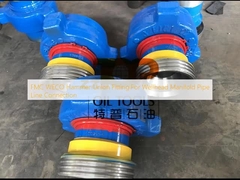
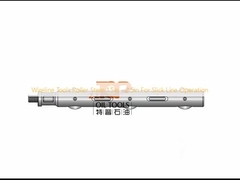
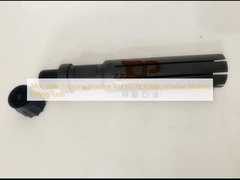
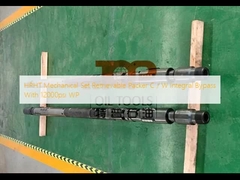
Brief: From concept to demonstration, this video highlights the evolution and practical outcomes of the Ball Activated Drop Ball Circulating Valve. You'll see how this coiled tubing pressure control equipment operates, learn the step-by-step process of activating the valve using a drop ball, and witness a demonstration of how pressure shears the pins to open circulation ports for enhanced flow control.
Related Product Features:
Enables circulation above the coiled tubing work toolstring when activated by a drop ball.
Surface-adjustable shear mechanism using variable numbers and types of shear pins for controlled activation.
Pressure applied to the seated drop ball shears pins and moves the sleeve to open side circulation ports.
Designed to increase flow area and pump rate through the coiled tubing string after activation.
Available in multiple sizes including 1 11/16", 2 1/8", 2 3/8", and 3 1/8" to match various CT requirements.
Features a high tensile strength up to 165,000 lbs and a maximum shear pressure rating of 5000 psi.
Operates effectively in temperature ranges from 0 to 400°F for normal service conditions.
Custom sizes and specifications can be manufactured upon request to meet specific operational needs.
সাধারণ জিজ্ঞাস্য:
How is the Ball Activated Circulation Valve activated?
The valve is activated by pumping a correctly sized drop ball through the coiled tubing string. The ball seats in the valve, blocking flow. When pressure is increased, the shear screws holding the seat shear, shifting it downward to uncover the circulating ports.
What are the key specifications available for this circulation valve?
Key specifications vary by size and include OD, ID, connection type, maximum shear pressure of 5000 psi, temperature rating of 0-400°F, tensile strength (e.g., up to 165,000 lbs for the 3 1/8" size), and corresponding drop ball sizes such as 5/8" or 1 1/8".
Can the shear pressure for activating the valve be adjusted?
Yes, the shear pressure required to activate the valve can be adjusted on the surface by varying the number and type of shear pins used in the assembly, allowing for customization based on operational requirements.